


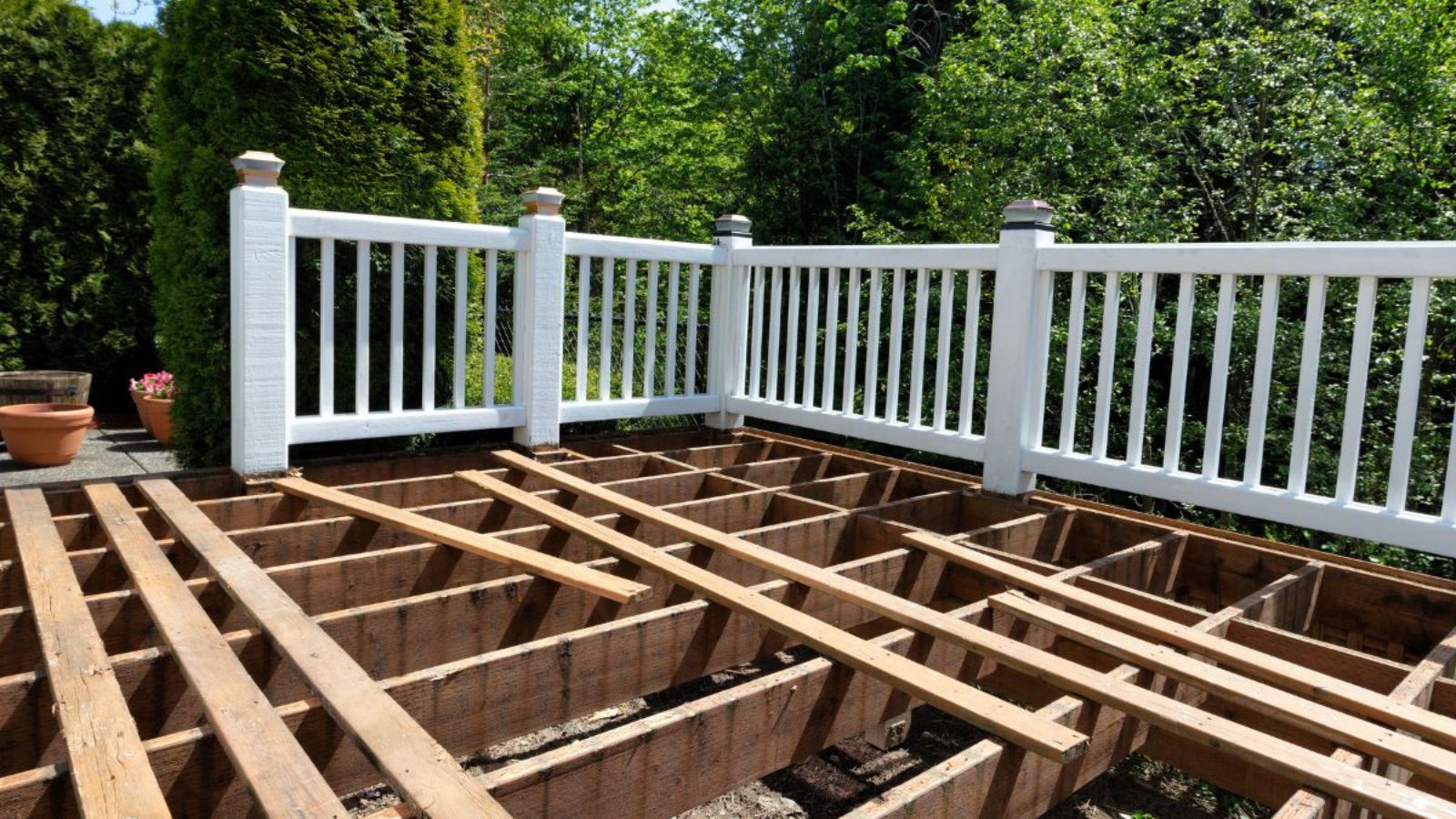
Deck structural damage often begins where it is least visible. While surface boards may appear sound after a hyper-humid Omaha summer, prolonged moisture beneath the deck can gradually affect framing members, connectors, and other structural components that support the entire structure.
Omaha’s combination of high humidity, frequent summer storms, and limited airflow beneath many decks allows moisture to remain trapped long after rainfall ends. Understanding how these conditions affect the hidden portions of a deck helps property owners recognize potential problems early and determine when a closer structural inspection may be warranted.
Why Moisture Lingers Beneath a Deck
The top of a deck benefits from sunlight and moving air that help dry the surface after rainfall. The underside experiences a different environment altogether.
Several conditions commonly slow the drying process:
- Limited airflow between framing members
- Dense landscaping that blocks ventilation
- Debris collecting between deck boards
- Soil beneath the deck remaining damp for extended periods
- Repeated cycles of morning dew and afternoon humidity
Even pressure-treated lumber is designed to resist decay, not eliminate the effects of constant moisture exposure. When framing remains damp over time, wood fibers can slowly weaken while metal connectors become more susceptible to corrosion.
These changes usually develop gradually, making them difficult to recognize without inspecting the structure below the decking surface.
Early Signs of Deck Structural Damage
Visible deck boards rarely tell the complete story.
During structural inspections, contractors commonly begin underneath the deck because the framing system reveals much more about the overall condition than the surface alone.
Early warning signs may include:
| Hidden Condition | Why It Matters |
|---|---|
| Darkened or consistently damp joists | May indicate moisture remains trapped for extended periods. |
| Soft or deteriorating wood near fasteners | Can signal the early stages of wood decay. |
| Rusting joist hangers or brackets | Corrosion may reduce connector performance over time. |
| Small cracks around bolts or lag screws | Repeated expansion and contraction can enlarge connections. |
| Loose ledger attachment points | One of the most important structural areas to monitor. |
These conditions do not automatically mean a deck has become unsafe, but they often warrant further evaluation before additional seasonal weather places more stress on the structure.
Why the Ledger Board Deserves Special Attention
One of the most critical structural components is the ledger board, which connects the deck to the home.
This area experiences continual exposure to water running down exterior walls, wind-driven rain, and seasonal humidity. If flashing has shifted, fasteners have loosened, or moisture repeatedly reaches the wood behind the ledger, deterioration may occur in areas that are not easily visible.
Because the ledger transfers much of the deck’s weight into the home’s framing, even localized deterioration can become more significant than surface cosmetic issues elsewhere on the deck.
For this reason, experienced contractors routinely inspect ledger connections whenever signs of moisture are present beneath the structure.
Omaha Summers Create Repeated Wet-and-Dry Stress
Humidity alone is rarely the only concern.
An Omaha summer often brings repeated thunderstorms followed by periods of heat, creating continuous wet-and-dry cycles throughout the season. Wood naturally expands as it absorbs moisture and contracts as it dries.
Over time, those repeated cycles can affect:
- Fastener holding strength
- Connector alignment
- Wood movement around joints
- Small separations between framing members
- Protective finishes that help shed moisture
While these seasonal movements are expected to some degree, prolonged humidity increases the amount of moisture retained within structural members before they have an opportunity to dry completely.
Surface Maintenance Does Not Always Reveal Hidden Problems
Routine cleaning and sealing remain valuable parts of deck maintenance, but they primarily protect exposed surfaces.
Many homeowners understandably focus on replacing weathered boards, applying fresh stain, or pressure washing before autumn. Those improvements enhance appearance but may not reveal developing structural concerns underneath.
A thorough inspection should also include:
- Looking beneath the deck for moisture retention
- Examining beams and joists for signs of deterioration
- Checking connectors for corrosion or movement
- Confirming ledger flashing remains properly positioned
- Clearing debris that traps moisture between framing members
Addressing small issues while framing is still accessible is generally less disruptive than waiting until structural components require more extensive repairs.
Late Summer Is Often the Best Time to Inspect
Late summer provides a useful opportunity to evaluate how the deck performed during Omaha’s most humid months.
Moisture-related concerns are often easier to identify before cooler temperatures arrive and before falling leaves begin trapping additional moisture around the structure. Inspecting after the most demanding weather also helps establish whether drainage, ventilation, or maintenance improvements should be completed before winter freeze-thaw cycles begin.
Rather than waiting until loose railings or uneven walking surfaces become noticeable, many contractors recommend evaluating structural components while any concerns remain relatively localized.
Prevent Deck Structural Damage
Much of deck structural damage begins beneath the surface, where moisture can remain long after summer weather has passed. Inspecting framing, connections, and other structural components after Omaha’s humid season helps identify hidden concerns before they progress into more extensive repairs.
Regular inspections support the long-term safety and performance of the deck by addressing developing issues before they become more significant.
Support Up Construction
At Support Up Construction, we provide complete residential improvement solutions designed to enhance the comfort, function, and value of your home. From custom decks and railings to flooring, windows and doors, trim work, bathroom renovations, shower remodels, HVAC services, sheds, and pergolas, every project is designed and built with precision by our owner and experienced craftsmen.
As a hands-on builder and designer, our founder personally oversees each project to ensure quality craftsmanship, dependable service, and long-lasting results you can trust.
Ready to upgrade your home?
Contact Support Up Construction today to discuss your next home improvement project.
Comments are closed