


A worn deck can create an expensive question when the surface looks worse than the structure underneath. Homeowners often need to determine whether replacing the decking is enough or whether rebuilding the entire deck provides better long-term value.
Deciding between deck resurfacing vs full replacement depends on the condition of the existing structure and the scope of work required. The lowest initial estimate is not always the option that costs less over the life of the deck.
Deck Resurfacing Can Make Financial Sense
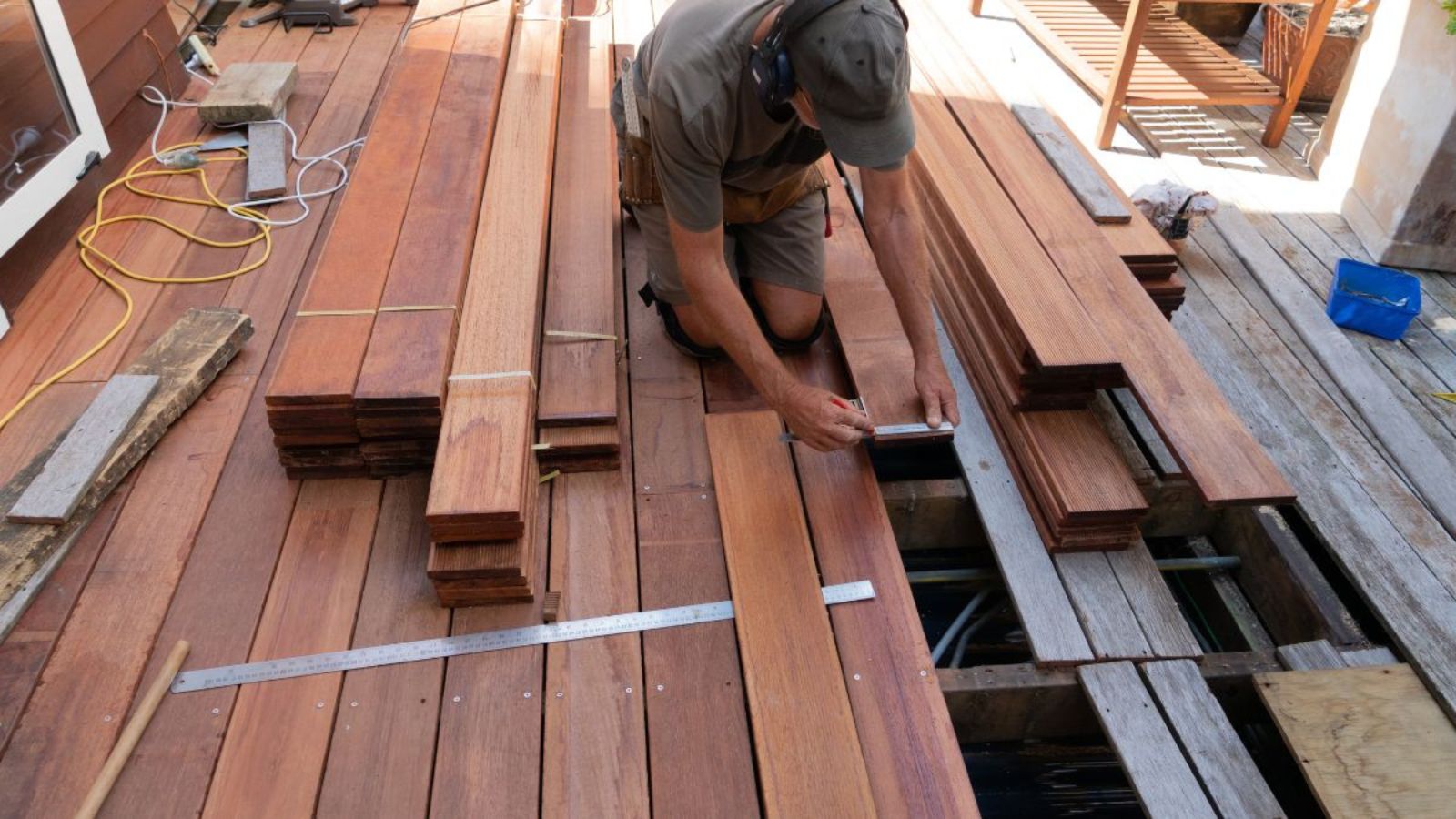
Deck resurfacing can be practical when deterioration is primarily limited to the decking surface. The existing framing remains in place while worn boards are removed and replaced with new decking.
An assessment should examine joists, beams, posts, stairs, ledger connections, and other structural components. These elements determine whether the existing frame can support continued use and the planned decking material.
Several conditions can support resurfacing:
- Joists remain structurally sound
- Beams show limited deterioration
- Posts remain stable
- Connections remain intact
- Stairs remain structurally sound
- Existing framing suits the new decking
An older deck does not automatically require complete replacement. The condition of the structural components provides more useful information than age alone.
Preserving sound framing can reduce demolition and reconstruction work. This can make resurfacing a practical option when the primary deterioration is limited to the deck surface.
Full Replacement May Provide Better Value
Full replacement becomes more relevant when deterioration affects multiple structural components. Extensive repairs can increase project costs and make retaining the existing frame less practical.
Potential concerns include:
- Deteriorated joists or beams
- Unstable posts
- Damaged stair framing
- Compromised ledger connections
- Widespread wood deterioration
- Multiple areas requiring structural reinforcement
Several individual repairs can also change the scope of a project. Addressing numerous framing members, stairs, and support components may require work that approaches the scope of a new deck.
A full replacement allows the structural system to be rebuilt as one project. This approach can also eliminate the need to coordinate new decking with an extensively repaired frame.
Project Scope Affects the Price
A resurfacing estimate may initially appear less expensive because much of the existing structure is being retained. A replacement estimate includes demolition and reconstruction that may not be part of a surface replacement.
The difference becomes important when additional structural work is required. The final cost should reflect the actual components being repaired, replaced, retained, or added.
| Deck Condition | Resurfacing | Full Replacement |
|---|---|---|
| Worn decking with sound framing | Often appropriate | May be unnecessary |
| Minor framing repairs | May be possible | Depends on repair extent |
| Several deteriorated framing members | May become less practical | Often more appropriate |
| Major stair deterioration | Additional work likely | Can be rebuilt |
| Widespread structural problems | Limited value | Often more appropriate |
| Existing layout no longer works | Retains most of the configuration | Allows a new layout |
Estimates should therefore be compared by scope rather than price alone. Decking, framing, stairs, railings, demolition, disposal, and other required work can affect the total project cost.
Omaha Weather Affects the Frame
Omaha decks experience seasonal moisture and temperature changes that can affect exterior wood components. Summer humidity, heavy storms, and winter freezing can expose framing and connections to changing moisture and temperature conditions.
| Omaha Condition | Potential Deck Concern |
|---|---|
| Summer humidity | Moisture can remain around areas beneath the deck |
| Heavy storms | Increased exposure to water and prolonged dampness |
| Winter freezing | Materials and connections experience cold conditions |
| Freeze and thaw cycles | Repeated temperature changes can affect exterior components |
Areas that deserve closer inspection include:
- Joist ends
- Fasteners
- Beam connections
- Posts
- Stair framing
- Ledger connections
Some deterioration can remain hidden beneath decking boards. A deck that appears to need only new boards may require a different project scope after the framing becomes accessible.
New Decking Cannot Correct Structural Problems
New decking addresses the walking surface, not the supporting structure. Replacing boards does not correct deteriorated framing, unstable posts, or compromised structural connections.
The decking material must also work with the existing structure. Composite decking can have specific requirements involving framing, joist spacing, drainage, and installation.
| Existing Condition | Consideration Before Resurfacing |
|---|---|
| Sound joists | May remain in place |
| Damaged joists | Repair or replacement may be required |
| Sound beams | May support the new decking system |
| Deteriorated beams | Structural work may be necessary |
| Stable posts | May remain in service |
| Unstable posts | Replacement may be required |
The existing frame should be evaluated against the requirements of the planned decking system. New surface material should not be used as a substitute for necessary structural repairs.
Full Replacement Can Update the Layout
Structural condition is not the only factor in a replacement decision. An older deck can remain functional while no longer fitting the property’s current use.
A full rebuild can address layout concerns such as:
- Poorly positioned stairs
- Limited usable deck space
- Difficult yard access
- Outdated railing configuration
- Deck dimensions that no longer suit the property
- Features that cannot be easily added to the existing structure
A replacement project provides an opportunity to reconsider the overall configuration. Deck size, stairs, railings, and other features can be incorporated into the new design.
This consideration is separate from structural repair needs. A deck may have sound framing but still require a larger construction project if the existing layout no longer meets the property’s needs.
Comparing the Long-Term Value of Deck Resurfacing Vs. Full Replacement
The decision comes down to three main factors: structural condition, project scope, and desired changes to the deck. Each factor can affect whether resurfacing or replacement provides the more practical long term option.
| Factor | Resurfacing May Be Appropriate | Replacement May Be Appropriate |
|---|---|---|
| Framing | Mostly sound | Widespread deterioration |
| Decking | Primary source of wear | Requires complete removal |
| Repairs | Limited | Extensive |
| Layout | Still suitable | Needs major changes |
| Project scope | Surface focused | Structural and design focused |
A sound frame with worn decking generally supports a resurfacing approach. Extensive structural repairs or major layout changes can make full replacement more practical.
The comparison should include all expected work rather than focusing on the initial estimate. This provides a clearer basis for determining which option fits the condition and intended use of the deck.
Frequently Asked Questions
When can a resurfacing estimate change after decking removal?
It can if deterioration hidden beneath the existing decking is discovered. The project scope may need to be adjusted if structural components require repair or replacement.
What should be included when comparing deck estimates?
The scope should identify decking, framing, stairs, railings, posts, beams, ledger work, flashing, demolition, and disposal where applicable. Estimates with different scopes should not be compared solely by their final totals.
Is partial deck resurfacing possible?
In some cases, selected sections can be replaced while other areas remain. The condition, appearance, dimensions, and remaining service life of each section should be considered before combining old and new decking.
How can new decking affect existing stairs?
Changes can occur if the replacement material has a different thickness from the existing decking. Differences in finished decking height can affect stair dimensions and transitions.
What design changes are possible with resurfacing?
Minor changes may be possible depending on the existing structure and project scope. Significant changes to deck size, stairs, or structural supports generally require additional construction beyond replacing the decking surface
Support Up Construction
At Support Up Construction, we provide complete residential improvement solutions designed to enhance the comfort, function, and value of your home. From custom decks and railings to flooring, windows and doors, trim work, bathroom renovations, shower remodels, HVAC services, sheds, and pergolas, every project is designed and built with precision by our owner and experienced craftsmen.
As a hands-on builder and designer, our founder personally oversees each project to ensure quality craftsmanship, dependable service, and long-lasting results you can trust.
Ready to upgrade your home?
Contact Support Up Construction today to discuss your next home improvement project.
Comments are closed